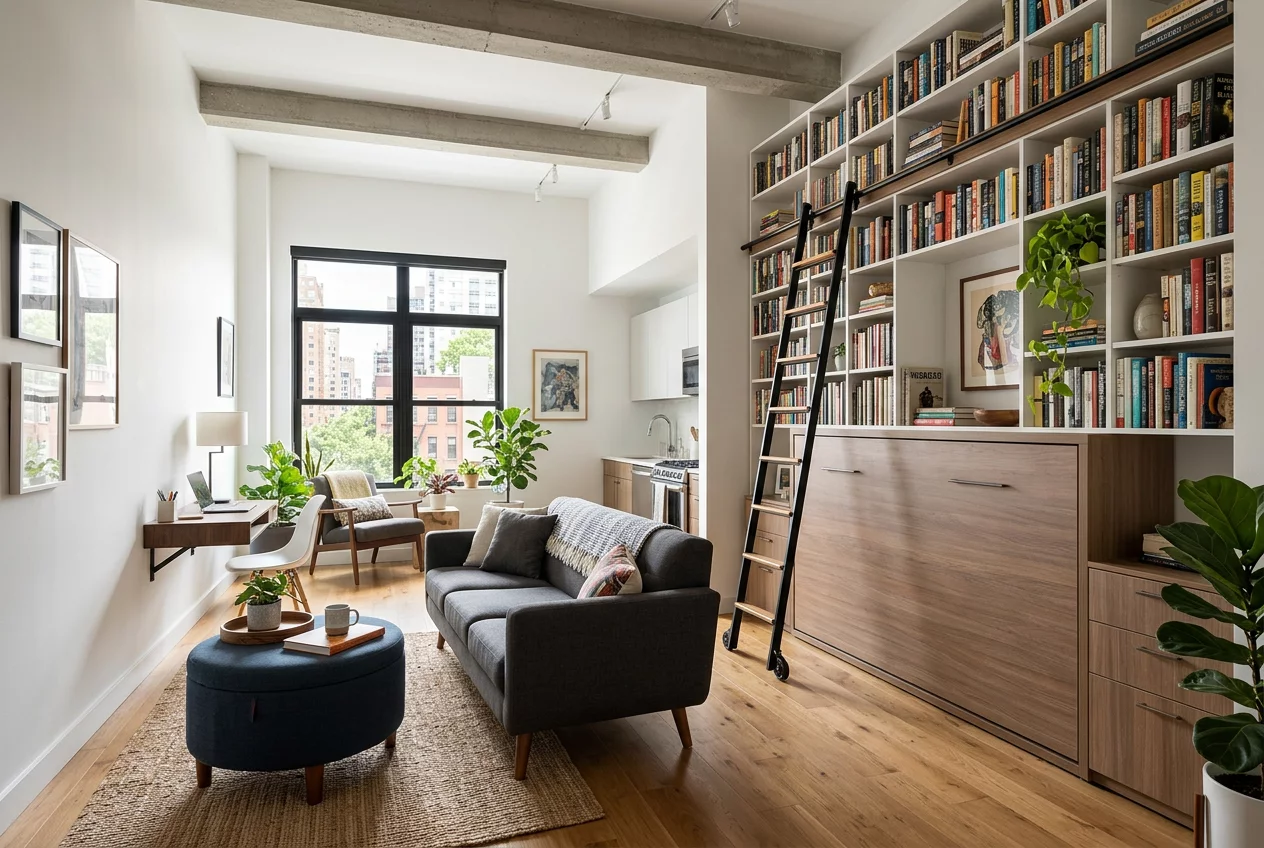
The Challenge of Small-Scale Living
Small apartments require a shift in perspective. Every square inch must justify its existence. When floor space is limited, the only way to go is up. Vertical storage and multi-functional furniture are the pillars of small-space optimization. The goal is to reduce visual clutter while maintaining all the necessities of a modern life. RoomFlow Handbook advocates for a 'less but better' approach, where each piece of furniture is chosen for its utility and its ability to blend into the architecture.
Utilizing the Full Height of the Room
Most people stop their storage at eye level, leaving the top third of the walls empty. In a small apartment, this is wasted potential. Floor-to-ceiling shelving units provide massive amounts of storage without taking up additional floor space. Use the higher shelves for items you only need occasionally, like seasonal decorations or suitcases. To keep the room from feeling closed in, choose open shelving for some areas and closed cabinets for others. Painting the shelving the same color as the walls helps it 'disappear' into the room.
Multi-Functional Furniture Pieces
In a small space, a piece of furniture should ideally do more than one job. An ottoman with a removable lid provides seating, a footrest, and storage for blankets. A dining table with drop-leaves can function as a console or a desk when not in use. Sofa beds have come a long way in terms of comfort and style, making them a viable option for studio living. RoomFlow Handbook recommends looking for furniture with 'legs' rather than solid bases. Seeing the floor continue under a sofa or a bed creates the illusion of more space.
Hidden Storage Opportunities
Storage can be found in the most unexpected places. The space under the bed is a prime location for rolling bins filled with out-of-season clothing. In the kitchen, a narrow pull-out pantry can fit into the six-inch gap between the fridge and the wall. Even the backs of doors can hold organizers for shoes, cleaning supplies, or pantry items. Built-in window seats provide a cozy place to sit while hiding deep drawers beneath. The key is to look for 'dead space' and find a creative way to fill it with purpose.
The Power of Folding and Wall-Mounted Units
Wall-mounted furniture keeps the floor clear, which is the most effective way to make a room feel larger. A wall-mounted 'floating' desk can be folded up when work is over. Similarly, a Murphy bed (a wall bed) can transform a living room into a bedroom in seconds. In the entryway, a simple row of hooks and a wall-mounted floating shelf can replace a bulky hall tree. These solutions provide the necessary functions without the heavy footprint of traditional furniture.
Visual Simplicity and Decluttering
Physical space is only half the battle; visual space is just as important. A small room filled with many small objects feels cluttered and chaotic. Instead, choose a few larger, more impactful pieces. Keep surfaces as clear as possible. Use baskets or bins to group small items together. A consistent color palette and a lack of busy patterns will make the apartment feel more unified and calm. Regular decluttering is essential; if an item hasn't been used in a year, it doesn't deserve a place in your small-scale sanctuary.