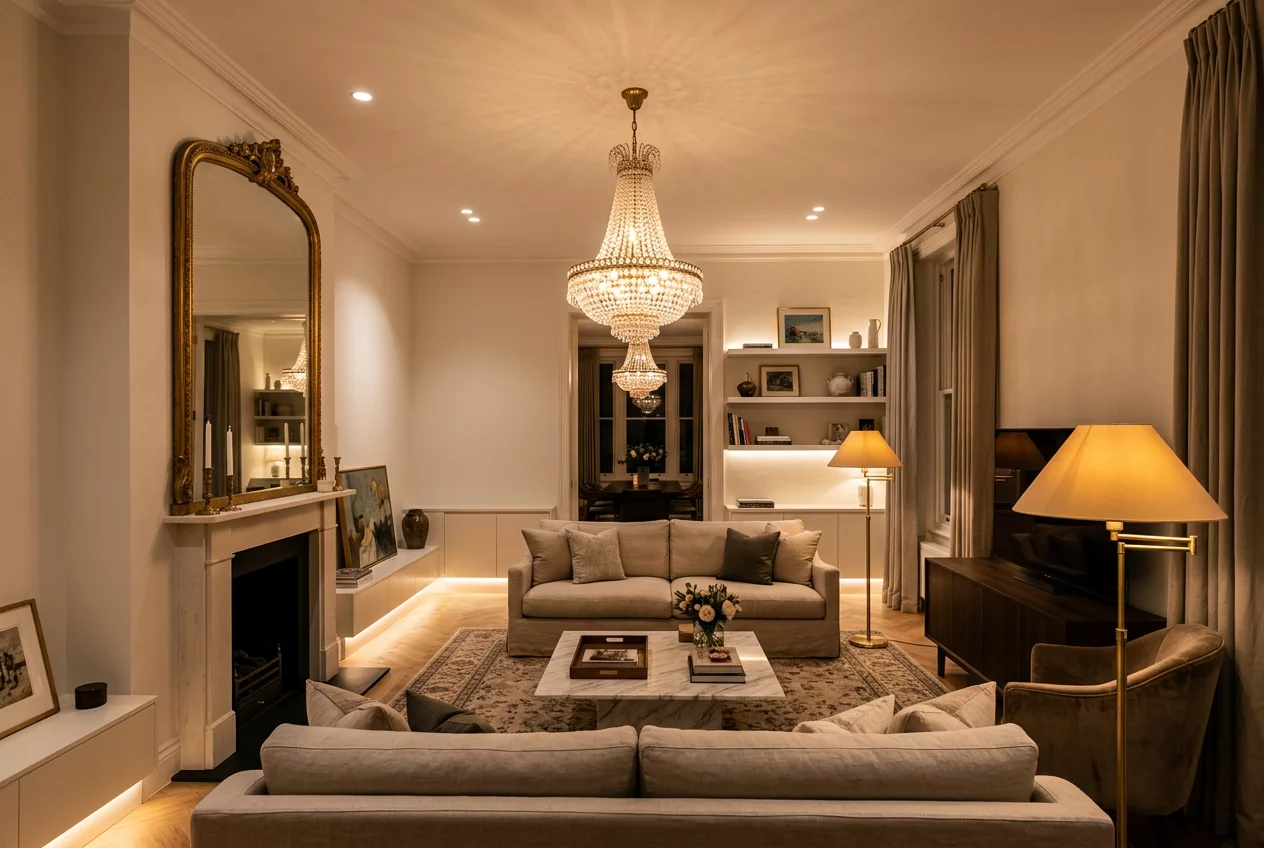
The Psychology of Space and Color
Color is one of the most powerful tools in a designer's kit. It has the ability to change the perceived size and shape of a room. Light colors reflect more light, making a space feel airy and expansive. Dark colors absorb light, creating a sense of intimacy and coziness. Understanding how these elements interact allows you to manipulate the 'feel' of a room without moving any walls. RoomFlow Handbook emphasizes that color choice should always be considered alongside the available natural and artificial light.
Expanding Space with Light Hues
To make a small room feel larger, lean toward a palette of whites, creams, and cool pastels. These shades have high Light Reflectance Values (LRV). Cool colors, such as soft blues and greens, are 'receding' colors; they appear to move away from the eye, making walls feel more distant. Painting the baseboards and trim the same color as the walls also removes visual breaks, which tricks the eye into seeing a continuous, larger surface. A satin or semi-gloss finish on these surfaces will reflect even more light, further enhancing the effect.
Creating Depth with Dark Tones
While light colors expand, dark colors provide depth and drama. A dark accent wall can make a room feel longer by drawing the eye toward the back. In a large, cavernous space, dark tones on the walls and ceiling can make the room feel more grounded and comfortable. This is particularly effective in bedrooms or media rooms where a 'cocoon' effect is desired. The key to using dark colors is to ensure there is enough light to prevent the space from feeling gloomy. Contrast is vital; pair dark walls with light-colored furniture or bright artwork to create visual interest.
The Three Layers of Lighting
Lighting should never come from a single source. A professional lighting scheme consists of three layers: ambient, task, and accent. Ambient lighting provides the general illumination for the room, often through ceiling fixtures. Task lighting focuses on specific areas where activities like reading or cooking happen. Accent lighting is used to highlight architectural features or artwork. RoomFlow Handbook suggests that combining these layers adds dimension to a room. It allows you to change the mood of the space instantly by turning different layers on or off.
The Impact of Color Temperature
Not all light is created equal. The color temperature of your bulbs, measured in Kelvins (K), significantly affects how colors look in your home. Warm light (2700K-3000K) enhances reds, yellows, and oranges, creating a cozy atmosphere perfect for living rooms. Cool light (4000K-5000K) is better for tasks and makes blues and greens pop. It feels more like natural daylight and is ideal for kitchens and bathrooms. Be consistent with color temperatures within a single zone to avoid a disjointed and jarring appearance.
Mirrors and Reflective Surfaces
Mirrors are essentially 'extra windows' that you can place anywhere. They reflect both light and the room itself, doubling the visual space. Placing a large mirror opposite a window is the most effective way to brighten a dark room. Beyond mirrors, consider other reflective surfaces like glass-topped tables, metallic accents, or high-gloss cabinetry. These materials bounce light around the room, preventing shadows from gathering in corners and keeping the atmosphere bright and energetic.